Frost Mage Review Sheet — Iufs
Encounter: Crown of the Cosmos Mythic
Fight length: ~8:34
Source: uploaded Warcraft Logs event logs
1) Overall verdict
You are active and clearly understand the basic Frost Mage engine. The log shows very high Ice Lance usage, fast Brain Freeze consumption, regular Frozen Orb casts, and frequent Ray of Frost usage. That is the good foundation.
The main thing holding you back is not “you do not know the spec.” It is planning quality around cooldown windows, movement, and defensives. Frost Mage is currently very priority-based: keep strong cooldowns rolling, spend Brain Freeze / Fingers of Frost efficiently, and always be casting. The current Wowhead guide specifically emphasizes using Ray of Frost and Frozen Orb often, spending procs quickly, and maintaining constant activity.
Biggest gains would come from:
- tightening Ray of Frost / Frozen Orb timing,
- reducing movement/downtime gaps,
- scripting defensives before predictable damage instead of reacting after the first hit,
- avoiding canceled Glacial Spikes during dangerous movement windows.
2) What you did well
Your button volume is strong. Over an ~8:34 fight, you logged 345 completed casts, around 40 casts per minute, which is a good activity baseline.
Your core spell profile also makes sense:
- Ice Lance: 174 casts
- Flurry: 56 casts
- Frozen Orb: 14 casts
- Ray of Frost: 12 casts
- Glacial Spike: 18 completed casts
- Frostbolt: 40 completed casts
- Ice Barrier: 11 casts
- Ice Cold: 3 casts
- Alter Time: 2 casts, one application and one return
The best part of the log is your Brain Freeze handling. You gained 36 Brain Freeze procs, and every one was removed quickly. Average time from Brain Freeze application to consumption was only about 1.3 seconds, with the longest delay around 2.6 seconds. That is strong and shows you are not sitting on important proc value.
You also used Ray of Frost 12 times and Frozen Orb 14 times, which is a solid count. The guide identifies Ray of Frost and Frozen Orb as major damage tools that should be used often, with Ray of Frost especially needing planned full channels.
3) Highest-priority improvement areas
Point 1 — Defensive timing is active, but not fully proactive
What happened: You used a good number of defensives overall:
- Ice Barrier: 11 casts
- Ice Cold: 3 casts
- Alter Time: 2 casts
- Healthstone: 1 use
The problem is that some major damage events happened before your defensive was active. The clearest examples are:
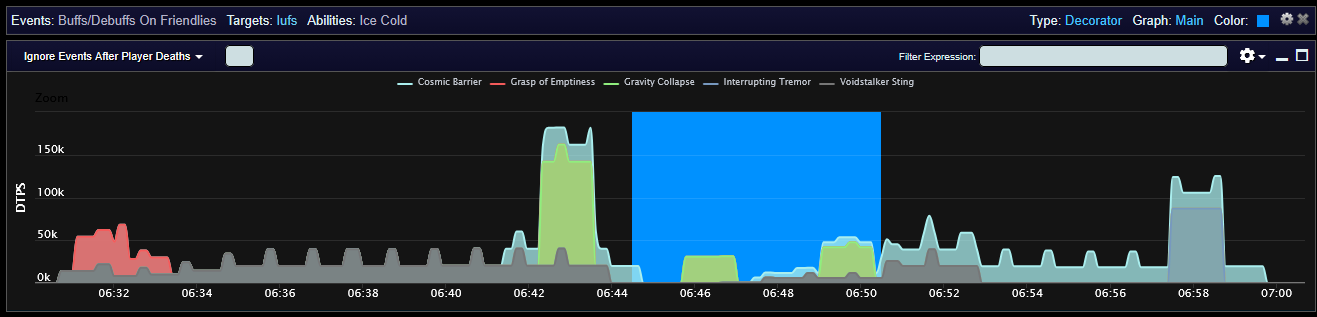
- 06:42 Gravity Collapse hit before Ice Cold at 06:44
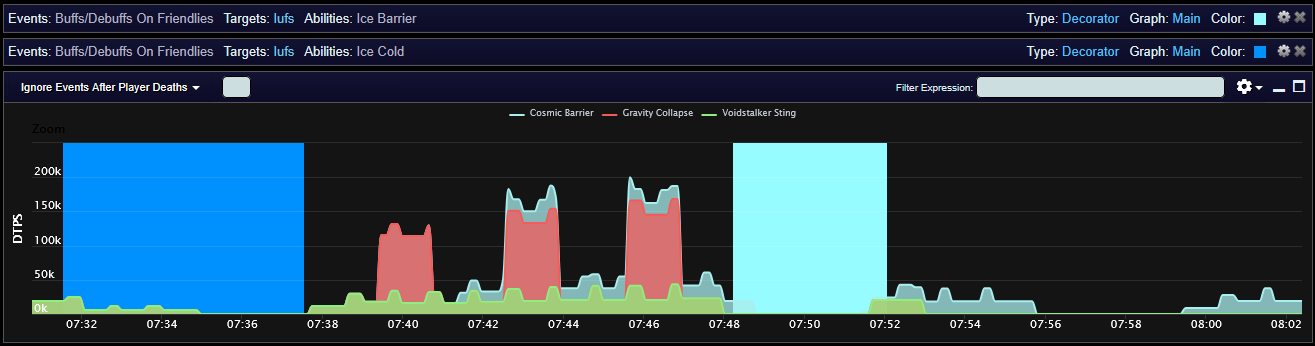
- 07:40 / 07:43 / 07:46 Gravity Collapse sequence happened before Ice Barrier at 07:48
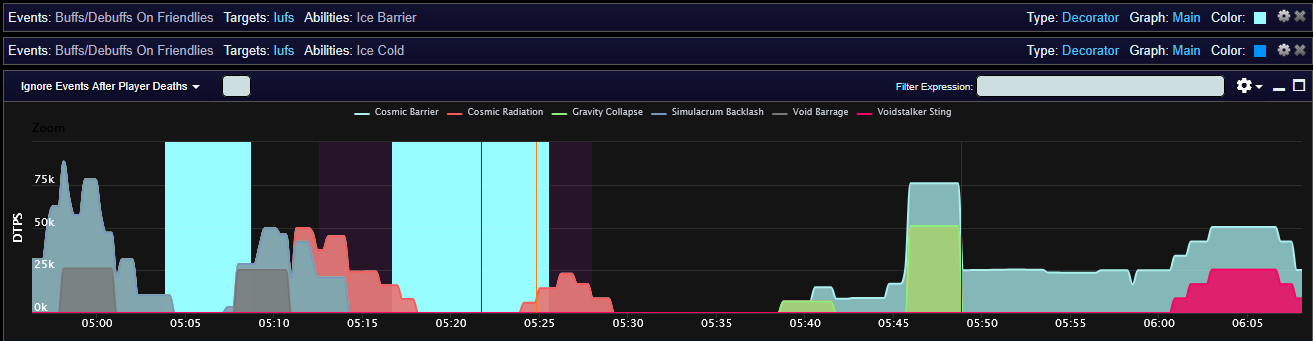
- 05:40 / 05:47 Gravity Collapse had no major personal defensive active
Why it matters: Mage has strong personal tools, but they are much better when used before damage lands. Ice Barrier, Ice Cold, Alter Time, and Healthstone should be assigned mentally to predictable danger points.
Coaching interpretation: Your defensive count is not the issue. You are pressing defensive buttons. The issue is that several uses look reactive. You need to pre-plan the next dangerous boss event and press the defensive 2–3 seconds before the hit, not after the first tick has already landed.
Severity: High
Point 2 — Glacial Spike cancels during dangerous movement windows
What happened: You had 7 canceled casts total:
- 5 Frostbolt cancels
- 2 Glacial Spike cancels
The Frostbolt cancels are minor. The Glacial Spike cancels matter more:
- 06:40 Glacial Spike canceled
- 07:08 Glacial Spike canceled
Both happened in later, more dangerous sections of the fight where movement and damage pressure were high.
Why it matters: Glacial Spike is a high-value cast. Canceling it costs cast time and delays your damage sequence. It is much more punishing than canceling a filler Frostbolt.
How it compares to guide priorities: Frost wants to maintain high casting uptime and convert its priority spells cleanly. If movement is coming, the better play is to reposition first, use instant casts while moving, then start Glacial Spike when you can actually finish it.
Coaching interpretation: This looks like a movement-planning issue. You are trying to keep damage going, which is good, but you sometimes start a long cast when the fight is about to force movement. In those moments, use Shimmer / Ice Lance / Flurry / defensive globals to bridge the movement, then plant and cast Glacial Spike.
Severity: Medium
Point 3 — Post-intermission restarts are good
What happened: The apparent cooldown gaps from around 01:52–02:54 are explained by the boss being immune. You then restarted very cleanly:
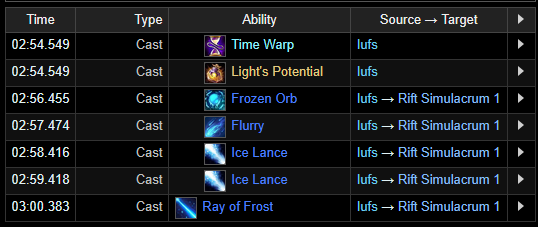
That is a strong post-intermission sequence.
Why it matters: Holding major cooldowns during an immune window is correct. The key is making sure they are ready and used immediately once the boss becomes damageable again.
How it compares to guide priorities: Frost’s guide emphasizes using Frozen Orb and Ray of Frost often, but “often” does not mean wasting them into immunity or 99% damage reduction. Your post-intermission usage is the right idea.
Coaching interpretation: This is more of a positive note than aa issue. Your job is to repeat this structure every time: survive the intermission, position early, pool the right resources, and restart immediately when full damage resumes.
Severity: None
4) Defensive cooldown usage — good and bad examples
Overall, your defensive usage is active but not fully scripted. You used:
- Ice Barrier: 11 times
- Ice Cold: 3 times
- Alter Time: 2 casts, one setup and one return
- Healthstone: 1 use
- Shimmer: 11 uses
That is a decent defensive toolkit usage count. The issue is timing: some defensives were excellent, while several major hits landed before mitigation.
Good defensive examples
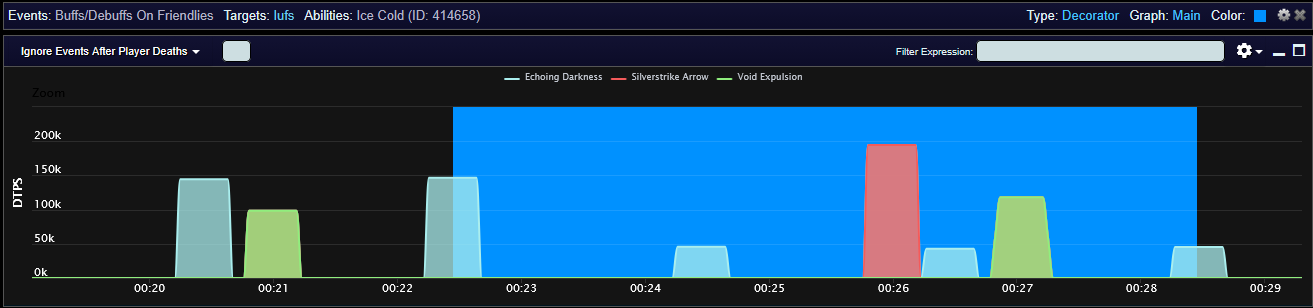
00:22 Ice Cold → 00:25 Silverstrike Arrow
You used Ice Cold at 00:22, then took Silverstrike Arrow at 00:25. This was a good example of a defensive being active before a large hit.
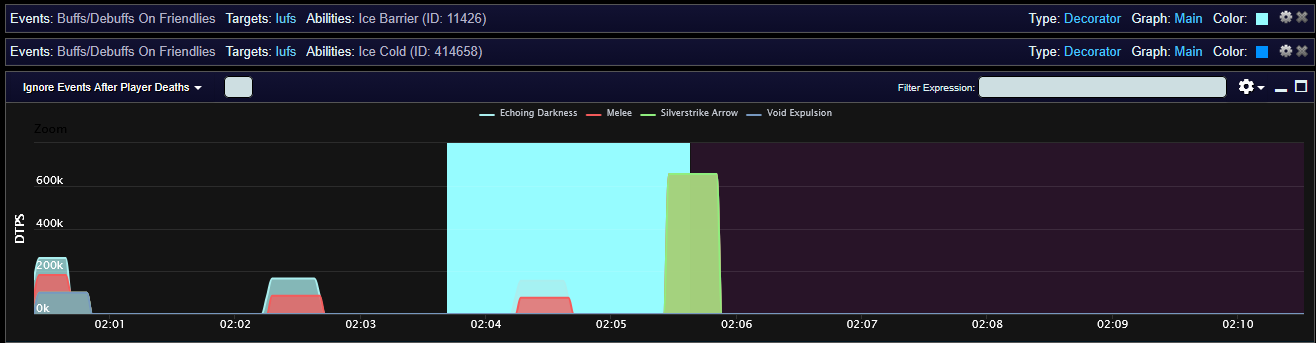
02:03 Ice Barrier → 02:05 Silverstrike Arrow
You used Ice Barrier at 02:03, and it absorbed a large part of the 02:05 Silverstrike Arrow. This is exactly the kind of proactive barrier usage you want.
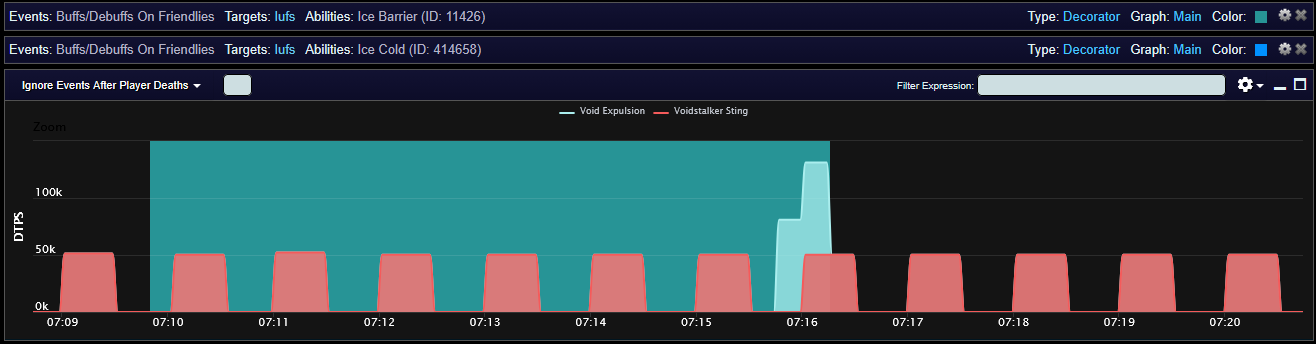
07:09 Ice Barrier during sustained Voidstalker Sting / Void Expulsion damage
You used Ice Barrier at 07:09, and it covered a dangerous section with repeated Voidstalker Sting ticks and Void Expulsion shortly after. Good timing.
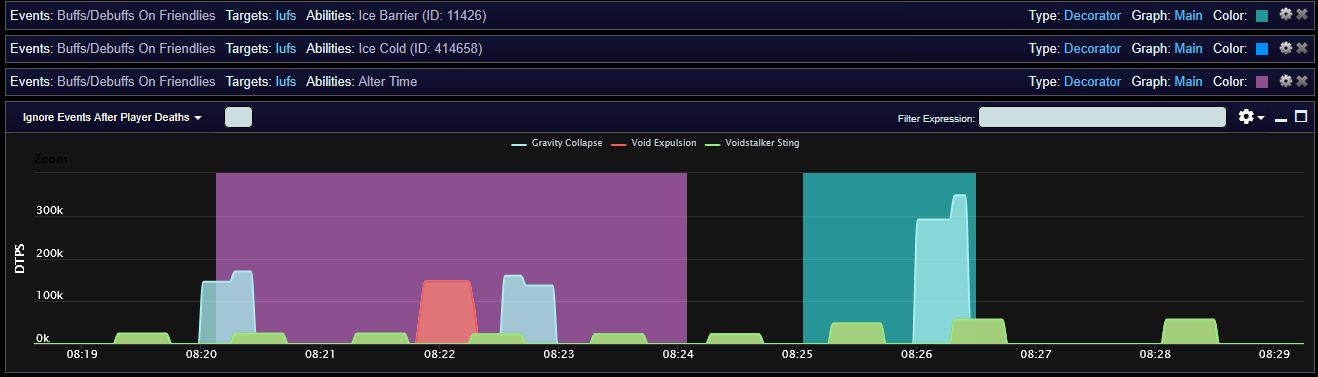
08:20 Alter Time → 08:24 return → 08:25 Ice Barrier
This was one of your better late-fight defensive sequences. You used Alter Time during Gravity Collapse / Void Expulsion pressure, returned it, then followed with Ice Barrier. That shows awareness.
Weak defensive examples
05:40 and 05:47 Gravity Collapse with no personal defensive active You took large Gravity Collapse hits around 05:40 and 05:47 without Ice Cold, Alter Time, or Ice Barrier active. These were among the largest actual damage hits in the log. This is the main defensive planning issue.
06:42 Gravity Collapse before Ice Cold At 06:42, you took a large Gravity Collapse hit before using Ice Cold at 06:44. Ice Cold then covered later hits well, but the first big hit was already through. This looks reactive rather than scripted.
07:40 / 07:43 / 07:46 Gravity Collapse sequence with no defensive until 07:48 This is the clearest late defensive window. You took multiple large Gravity Collapse hits, including around 07:43 and 07:46, then used Ice Barrier at 07:48. That is late. The defensive should be planned before the sequence starts, not after the scary hits already happened.
Coaching takeaway: Your defensive count is not the problem. Your timing is. For this boss, you should pre-plan defensive assignments around the big Gravity Collapse / Arrow-style hits. Frost Mage has excellent tools here, especially with Ice Barrier, Ice Cold, Alter Time, and Healthstone. The wowhead guide also highlights that Glacial Bulwark gives extra defensive flexibility and makes scripted defensive use a major optimization point.
5) Timestamp review — good and bad examples
Good example — 02:54 to 03:08: clean burst restart
Sequence:
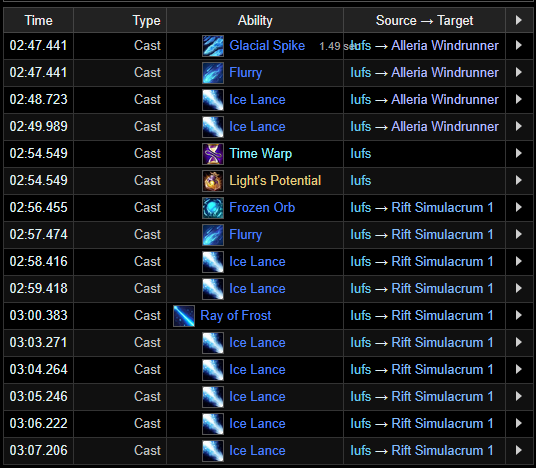
Why it is good: This is a strong restart window. You line up Time Warp, Frozen Orb, Flurry, Ice Lance conversion, and Ray of Frost. Time Warp should be used before Ray of Frost or when the group needs it, so this sequence makes sense.
Good example — 05:16 Ice Barrier during 99% reduced-damage intermission
You used Ice Barrier at 05:16 during the intermission where the boss takes 99% reduced damage.
During the boss intermission, this is a good survival button. You are not expected to push meaningful boss damage here. Your job is positioning and staying healthy. Using Ice Barrier during this kind of low-DPS-value but high-movement/damage window is correct.
Weak example — 00:00 to 00:13: opener is active, but Ray is slightly delayed
Sequence:
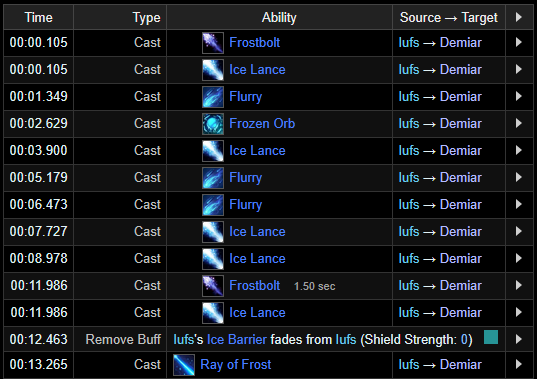
Why it is weak: You are active, but Ray of Frost comes later than the guide’s opener concept. The opener goal is to get Ray of Frost’s cooldown rolling early. Your opener is not broken, but it is not as clean as it could be.
Weak example — 06:40 to 06:49: late defensive after a canceled cast
Sequence:
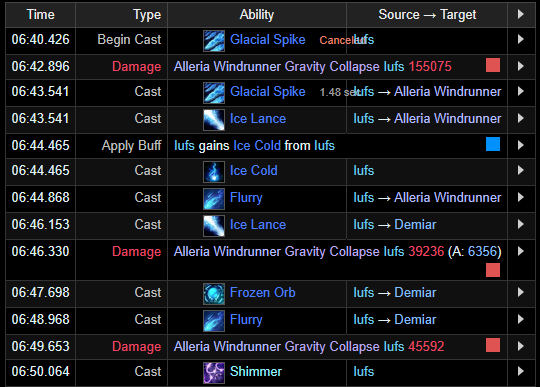
Why it is weak: Ice Cold was a good button, but it came after the first large hit. The canceled Glacial Spike right before this also suggests movement pressure was predictable. This should be scripted as: move / defensive first, then resume the Spike or instant-cast sequence.
6) Mechanical / execution notes
Canceled casts: Seven canceled casts total is not terrible, but the two canceled Glacial Spikes are worth cleaning up. Frostbolt cancels are small losses; Glacial Spike cancels are more expensive.
Proc usage: Brain Freeze handling is strong. You are not sitting on Brain Freeze. Fingers of Frost also appears generally well-spent, though there are a few longer buff durations over 5 seconds. That is a cleanup point, not a major flaw.
Defensive usage: Ice Barrier count is good at 11 casts, but usage is inconsistent. Some barriers were excellent; others came after the first major hit or were absent during large Gravity Collapse sequences.
Mobility: You used Shimmer 11 times, so you are not ignoring mobility. The improvement is pairing movement with better instant-cast damage. Shimmer should help you preserve casts, not just save you after movement has already broken your plan.
7) What to fix first, in order
Priority 1 — Script defensives for Gravity Collapse / Arrow-style hits. Do not wait until after the first big hit. Pre-plan Ice Barrier, Ice Cold, Alter Time, and Healthstone.
Priority 2 — Keep post-intermission restarts sharp. Your 02:54 restart was good. Repeat that. During immune or 99% reduced-damage windows, survive, position, hold major cooldowns, and restart immediately when damage matters.
Priority 3 — Reduce movement downtime. During movement, default to Ice Lance / instant globals instead of doing nothing.
Priority 4 — Stop starting Glacial Spike when movement is about to force a cancel. Move first, instant-cast while moving, then Spike when stable.
8) Practice goals for next time
Your focus should be: Planned defensives, clean post-intermission restarts, and no wasted Glacial Spikes.
Use this in-head checklist during the fight:
“Is the boss damageable?”
“Is Orb or Ray ready?”
“Is a big hit coming in the next 3 seconds?”
“Do I need Barrier, Ice Cold, Alter, or Healthstone before it?”
“Can I finish this Glacial Spike safely?”
“If I have to move, what instant am I pressing?”
Concrete goals for the next pull:
- Use Ray of Frost earlier in the opener.
- Have a defensive planned before every major Gravity Collapse sequence.
- Repeat the strong 02:54 post-intermission restart structure.
- End the next pull with zero canceled Glacial Spikes.
9) Final coach summary for the player
You have good Frost Mage fundamentals. Your activity is strong, your Brain Freeze conversion is clean, and your cooldown count is where it should be.
The main thing to clean up is planning. Your defensives need to happen before the dangerous hit, and your Glacial Spikes need to be started only when you can finish them. Keep your strong post-intermission restarts, stop reacting late to Gravity Collapse, and your performance should become even more consistent.